
We're located in the historic center of Bitonto, 10 km from Bari Airport. Ideal for groups and families.
Welcome to Bitonto, one of Puglia's most charming towns, located just a few kilometers from Bari and the airport, along the ancient road connecting the Adriatic Sea to the Murgia plateau. Surrounded by centuries-old olive groves, it is known as the "city of olives" for its historic tradition and excellent extra virgin olive oil production.
If you're looking for accommodations near Bari Karol Wojtyła Airport, you'll likely need a convenient, easy-to-reach option suited to your type of trip. Whether you're traveling for business, pleasure, or with a group of friends, finding a strategically located accommodation can make all the difference.
The Norman Tower House is a perfect choice for those who want to:
avoid the chaos of Bari while being just 15 minutes from the city center
stay in an authentic setting in a famous historic center with plenty of amenities
have more affordable prices for higher quality
enjoy a typical Apulian experience
This 13th-century property is a welcoming retreat located in a tranquil, ancient courtyard, perfect for those seeking a blend of history and homely warmth. Here you'll find a relaxing and well-equipped space, ideal for unwinding or exploring the wonders of Bitonto and its surroundings. On the top floor, the property features a bright terrace with sun loungers, an umbrella, and tables for enjoying the sun year-round.
Bitonto's origins date back to ancient times, with evidence dating back to the 8th century BC. Over the centuries, and particularly in the Middle Ages, the city established itself as an important cultural, artistic, and religious center, leaving behind extraordinary architectural masterpieces. Among these, the magnificent 12th-century Romanesque Cathedral stands out, one of Puglia's most authentic treasures.
Today, Bitonto captivates visitors with its charming historic center: a maze of stone alleys that open onto elegant squares, noble palaces, and captivating churches. Every corner tells a story, carved into the stone facades, decorated portals, and works of art housed within the religious buildings.
But Bitonto is more than just art and history: it's also nature. The olive groves surrounding the city offer unique landscapes and represent a priceless agricultural and cultural heritage. The sea, with the beaches of Santo Spirito and Giovinazzo, is just 5 km away.
Let yourself be captivated by its authentic atmosphere, the flavors of Puglia's tradition, and the warm local hospitality. Bitonto is a destination capable of uniting past and present, art and nature, offering every visitor a truly unforgettable experience.
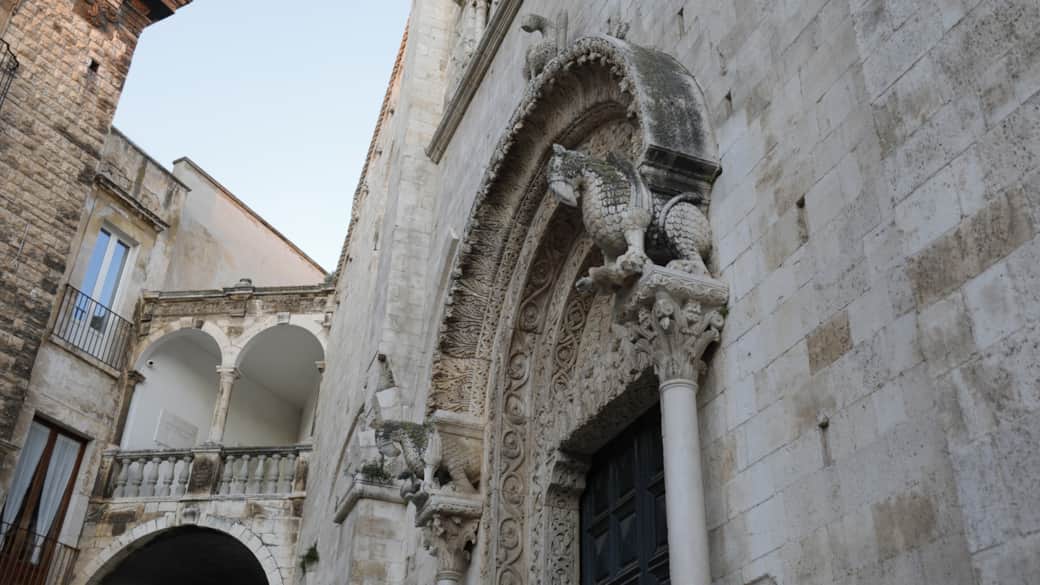
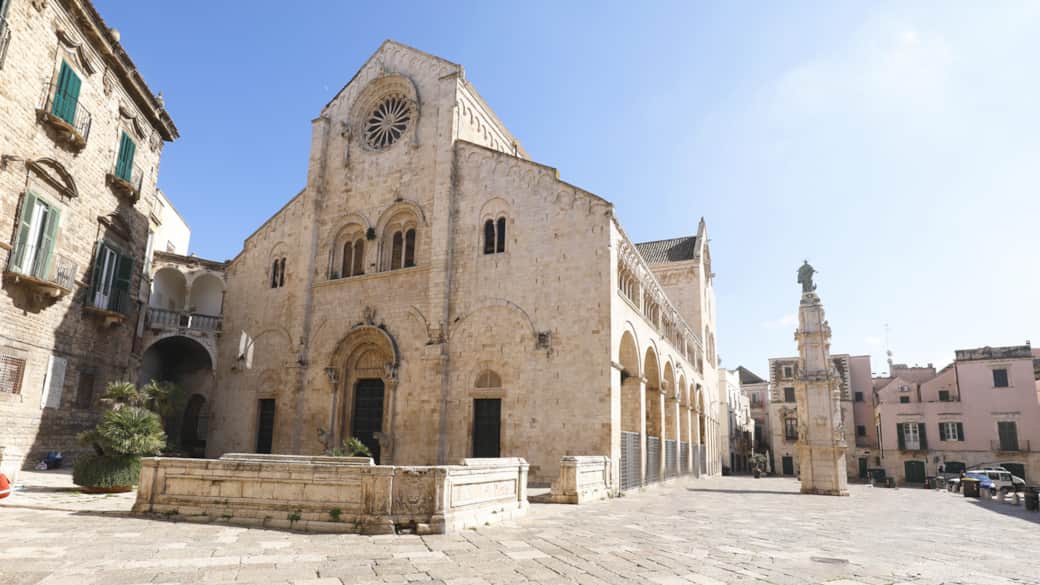
Bitonto Cathedral stands in the heart of the ancient city. It stands at the exact point where the Hellenistic-Roman roads, today identified as Via dei Mercanti and Via Planelli, respectively the cardo and decumanus, intersect.
The Cathedral's foundation dates back to the late 11th century, during the Norman period, under the leadership of Robert of Hauteville, known as Guiscard. Under the episcopate of Arnolfo, bishop of the city between 1085 and 1095, work began on the crypt, constructed by removing the apse of the earlier early Christian basilica dedicated to Saint Valentine.
By the time the Cathedral was completed, between 1229 and 1240, it must have already been imposing and towering over the urban skyline.
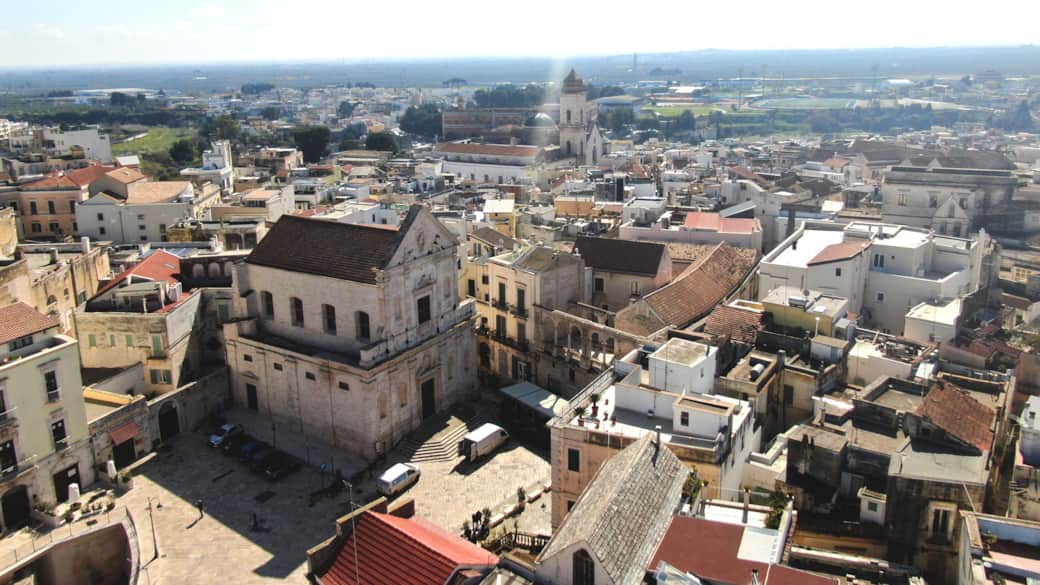
The Church of San Gaetano stands majestically in Piazza Cavour, a testament to the solemn elegance of Baroque architecture and the long history of the Theatines in the city. Its construction began on December 6, 1609, when the cornerstone was laid in the presence of a celebrating population. To build it, the Theatines demolished the old Baptistery of San Giovanni, located where the church steps now stand, and converted the surrounding houses into a convent. However, construction progressed slowly, and it was not yet completed, consecrated in 1730.
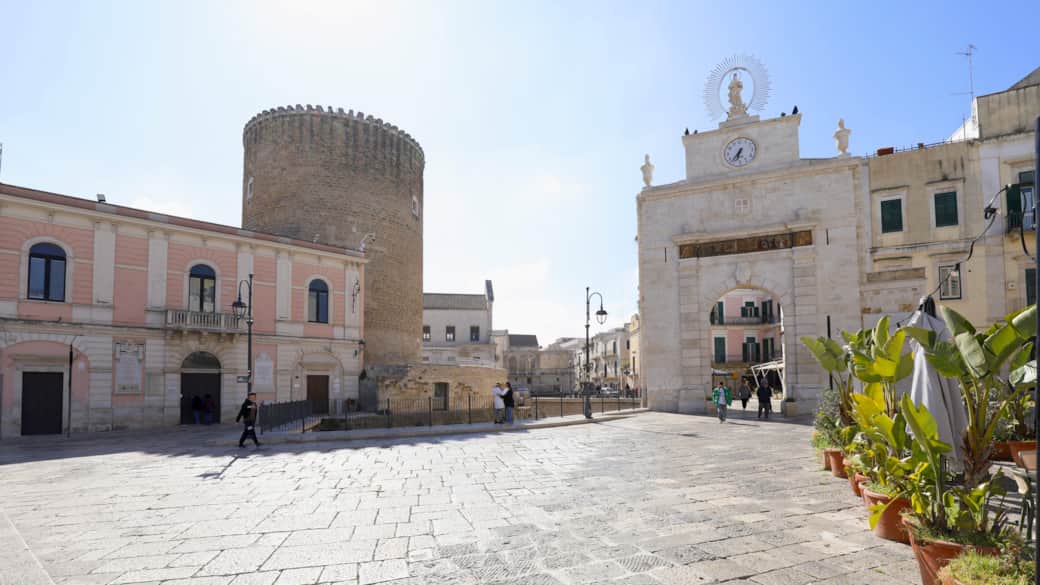
The Angevin Tower is the most imposing and resistant of the twenty-eight towers that once lined the city walls of Bitonto. Built in the late 14th century, it stands on the site of a pre-existing Norman-Swabian fortification and was intended to protect the Porta Baresana.
Despite the passage of the centuries, the Tower's external structure has remained virtually intact. Its cylindrical structure is typical of Angevin fortifications: it has a maximum diameter of 16.32 meters and a circumference of 50.77 meters, with a height of 24.05 meters from the current floor level. The ground floor is constructed of stone, while the upper floors are made of tuff and terminate in simple battlements.